

How Do Medical Wristbands Help Emergency Teams Make Decisions Quickly?
In an emergency, every second that passes without the right information is a second closer to a preventable mistake. A patient who cannot speak, a family member who is not present, a wallet with no medical history inside—these are the realities emergency teams face constantly. Utilizing the high-quality medical wristbands Dubai healthcare facilities rely on solves this problem by putting critical information exactly where it needs to be: on the patient.
This guide walks through every way these small bands carry enormous responsibility. Read until the end—the last few points might surprise you.
What Are Medical Wristbands?
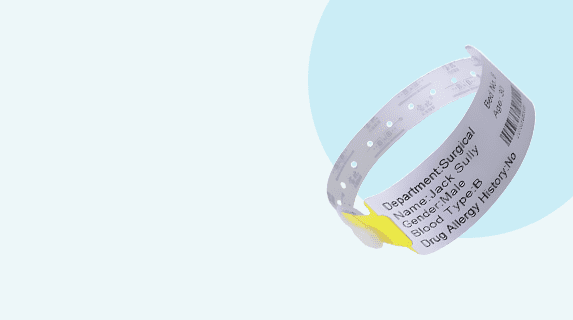
Medical wristbands are identification bands worn on a patient’s wrist that display essential health information—including name, blood type, allergies, diagnoses, and medication alerts. Finding the best medical wristbands Dubai providers offer ensures these bands serve as an immediate, always-accessible reference point for medical staff, particularly in emergencies where verbal communication is impossible or delayed.
Why Speed of Information Is Everything
When a patient arrives unconscious, the emergency team is working against time and without context. Every diagnostic guess wastes precious minutes. The faster a clinician can access accurate patient data, the faster treatment begins. This is not about convenience—it is about survival, and integrating the advanced medical wristbands Dubai hospitals use daily sits at the center of that equation.
How Medical wristbands Dubai Solutions Accelerate Care
1. Instant Patient Identification Without Documentation Delays
The first challenge in any emergency is confirming who the patient is. Implementing standard medical wristbands Dubai systems eliminates the need to search bags, contact relatives, or wait for records to load. A glance at the wrist gives the team a name and identification number immediately, allowing them to pull up the correct file within moments.
2. Communicating Critical Allergy Alerts Before Treatment Begins
Administering the wrong medication to an allergic patient can be fatal. The safest medical wristbands Dubai clinics utilize flag known allergies clearly and visibly, often using color-coded systems that alert any staff member—not just the attending doctor. This layer of passive safety works even in chaotic, high-pressure environments.
3. Displaying Blood Type for Trauma and Surgical Teams
In trauma cases involving significant blood loss, transfusion decisions cannot wait for lab results. A wristband displaying a verified blood type gives surgical and emergency teams the information they need to act immediately, potentially saving a life in the critical minutes after a severe injury.
4. Flagging Chronic Conditions That Change Protocols
A patient with diabetes, epilepsy, or a heart condition requires a fundamentally different emergency response. Healthcare tracking technology relies on condition-specific alerts that instantly shift a clinician’s approach, preventing a well-intentioned treatment from interacting dangerously with an underlying condition.
5. Supporting Durability With Waterproof Materials
Emergency care happens in unpredictable environments—blood, sweat, fluids, and constant handling are standard. A wristband that smudges defeats its own purpose. Sourcing the durable medical wristbands Dubai medical centers prefer maintains print clarity and structural integrity under clinical conditions, ensuring the information remains legible.
6. Enabling Barcode and QR Scanning for Digital Records
Modern identification assets go beyond printed text. Barcodes and QR codes printed directly on the band connect securely to a patient’s electronic health record when scanned. This gives emergency teams instant access to full medication histories and previous diagnoses from a single scan. You can read more about how hospital networks integrate patient data ecosystems globally via this overview of Health Information Technology on Wikipedia.
7. Reducing Medication Errors Across Shift Changes
Hospitals operate in shifts, and handover periods are statistically among the highest-risk moments for medical errors. A durable wristband acts as a constant, shift-neutral reference that does not change when the staff does, allowing any nurse or doctor to verify identity independently.
8. Protecting Vulnerable Patients in High-Footfall Facilities
In busy hospitals and emergency departments, patient mix-ups are a genuine operational risk. Wristbands ensure every individual is definitively identifiable at every point of care. For pediatric or elderly patients, this continuous identification layer is a fundamental safety requirement.
Final Word
The difference between a good emergency response and a great one often comes down to what information was available and how fast it was accessed. Deploying top-tier medical wristbands Dubai variants ensures an active safety tool functions every moment a patient is in care. To upgrade your medical facility’s client safety hardware, explore the specialized identification options available at AEC International.
FAQs
- What information is typically printed on a medical wristband?
Most medical wristbands Dubai healthcare providers use include the patient’s full name, ID number, blood type, known allergies, and primary diagnosis for rapid staff reference. - How do color-coded medical wristbands work in hospitals?
Different colors signal specific alerts—red for allergies, yellow for fall risk, purple for do-not-resuscitate orders—allowing any staff member to respond appropriately at a glance. - Are waterproof wristbands necessary for all medical settings?
Yes. Clinical environments involve frequent fluid exposure. Waterproof choices maintain print legibility and structural durability throughout a patient’s entire treatment period.