

Common Patient Identification Errors and How Wristbands Solve Them
The wrong medication was given to the right patient! A surgical procedure performed on the wrong person! These are not hypothetical horror stories- they are documented, preventable events that happen in hospitals around the world when patient identification breaks down. The consequences range from delayed treatment to irreversible harm, and in every case, a simple system failure is at the root. Reliable patient identification wristbands in the UAE exist precisely to close these gaps before they become incidents. In this guide, we walk through the most common identification errors healthcare facilities face and explain exactly how wristbands address each one. Stay with us- what you read here could inform decisions that protect real lives.
What Patient Identification Actually Means in a Clinical Setting
Patient identification is the process by which healthcare staff verifies that the correct patient is receiving the correct treatment, medication, procedure, or test- using a minimum of two unique identifiers at every point of care.
When this process works, it is invisible. When it fails, the consequences become very visible, very quickly. Understanding where errors originate is the first step toward building systems that genuinely prevent them.
1. Verbal Confirmation Without Physical Verification
When Asking “Are You, Mr. Ahmed?” Is Not Enough
Verbal confirmation alone is one of the most common and dangerous identification shortcuts in healthcare. Patients who are drowsy, confused, hard of hearing, or simply trying to be agreeable will often confirm a name that is not theirs. Staff acting on that verbal confirmation alone are one step away from a serious error.
How Wristbands Remove the Guesswork
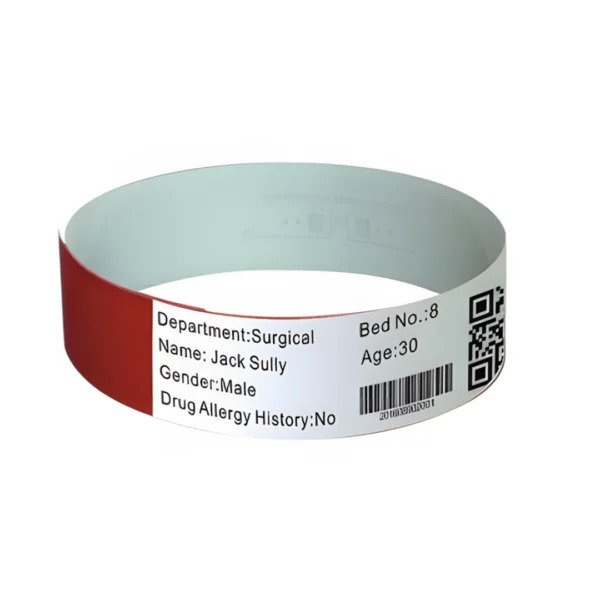
A wristband carries printed identifiers- full name, date of birth, patient ID number, and often a barcode- that can be cross-referenced against the patient’s chart before any intervention. The check is physical, repeatable, and does not depend on the patient’s ability to respond accurately in the moment.
2. Illegible or Incomplete Paper Records
Handwritten Notes Are a Liability at Scale
In high-volume healthcare environments, handwritten records introduce errors at every transfer point. A misread surname, a transposed date of birth, or an incomplete medical record number can cause one patient’s information to be confused with another’s- especially when names are similar or departments are understaffed.
Printed Wristband Data Eliminates Transcription Risk
Wristbands produced directly from the hospital’s patient management system carry accurate, system-verified data. There is no handwriting to misread and no manual transcription step where errors can enter. The information on the wristband matches the source record exactly, every time it is printed.
3. Patient Mix-Ups During Ward Transfers
Moving Patients Creates Identification Gaps
Every time a patient moves- from emergency to ward, from ward to theatre, from recovery to ICU- there is a window where identification can slip. Staff in the receiving department may not have the full context, and assumptions made during handover can lead to the wrong patient being treated under the wrong file.
Wristbands Travel With the Patient, Not the Paperwork
Unlike a chart that stays at the nurses’ station or a digital record that requires a login to access, a wristband is physically attached to the patient at all times. Any clinician at any point in the journey can verify identity immediately, without waiting for documentation to catch up.
4. Delayed or Missed Alerts for High-Risk Patients
Allergy and Risk Information Must Be Instantly Visible
A patient with a severe penicillin allergy who is admitted unconscious cannot advocate for themselves. If that allergy information is buried in a file that has not yet been reviewed, the risk of an adverse event is real and immediate. Standard identification processes do not always surface critical alerts fast enough.
Colour-Coded and Data-Rich Wristbands Fill This Gap
Modern wristband systems use colour coding to flag allergies, fall risks, DNR status, and other critical conditions at a glance. RFID wristbands in the UAE take this further by embedding digital patient records that can be scanned instantly by any enabled device- giving clinical staff access to critical data in seconds, even in emergency situations.
5. Wristband Damage or Removal During Long Admissions
A Wristband That Fails Is Worse Than No System at All
During extended hospital stays, wristbands face real wear- exposure to water, medical procedures, patient movement, and accidental pulling. A wristband that fades, tears, or falls off midway through an admission creates exactly the kind of identification gap that the system was designed to prevent.
Material Choice Determines Long-Term Reliability
Vinyl wristbands in the UAE are specifically designed for durability in clinical environments. They resist water, withstand repeated sanitization, maintain print clarity over extended wear, and remain securely fastened through the full duration of a patient’s stay. Choosing the right material is not a minor procurement detail- it is a patient safety decision.
Building an Identification System That Actually Holds Together
Two-Identifier Minimum: Every wristband should carry at least two unique identifiers- name and date of birth at minimum, with a patient ID number as standard practice.
System Integration: Wristbands should be printed directly from the hospital information system to eliminate manual data entry errors at the source.
Staff Protocol: Wristband checks should be a mandatory, documented step before medication administration, procedures, and patient transfers.
Material Matching: Wristband material should be selected based on the patient’s department, expected stay length, and exposure to clinical environments.
Replacement Policy: A clear protocol for replacing damaged or removed wristbands should be in place so that no patient is ever without verified identification.
The Takeaway: Small Bands, Serious Consequences
Patient identification errors are almost always preventable, and they almost always trace back to a process gap rather than a personnel failure. A well-designed wristband system closes those gaps systematically- across every shift, every department, and every patient transfer. For healthcare facilities committed to safety, reliable patient identification wristbands in the UAE are not a nice-to-have addition to clinical protocol. They are the foundation that every other safety measure depends on. Get this right, and a significant category of preventable harm simply stops happening.
Frequently Asked Questions
How often should patient identification wristbands be replaced during a long hospital admission?
Wristbands should be replaced immediately if they show damage, become unreadable, or are removed for any clinical procedure, with no gap in identification coverage.
Can wristband systems integrate with existing hospital management software without requiring a full IT overhaul?
Most modern wristband printing systems are designed to connect with standard hospital information systems using existing infrastructure, with minimal setup time required.
Are there specific wristband standards or regulations that healthcare facilities in the UAE must follow?
UAE healthcare regulators recommend adherence to international patient safety goals, which include standardized two-identifier wristband protocols across all licensed facilities.
How do wristbands help in situations where a patient is unconscious or unable to communicate their identity?
The wristband provides verified identification independently of the patient’s ability to respond, allowing staff to confirm identity and access critical health data immediately.
What makes RFID wristbands more suitable than standard barcode wristbands for certain clinical environments?
RFID wristbands allow contactless scanning at a distance, reduce handling time in sterile environments, and can store more data than a standard barcode format allows.