

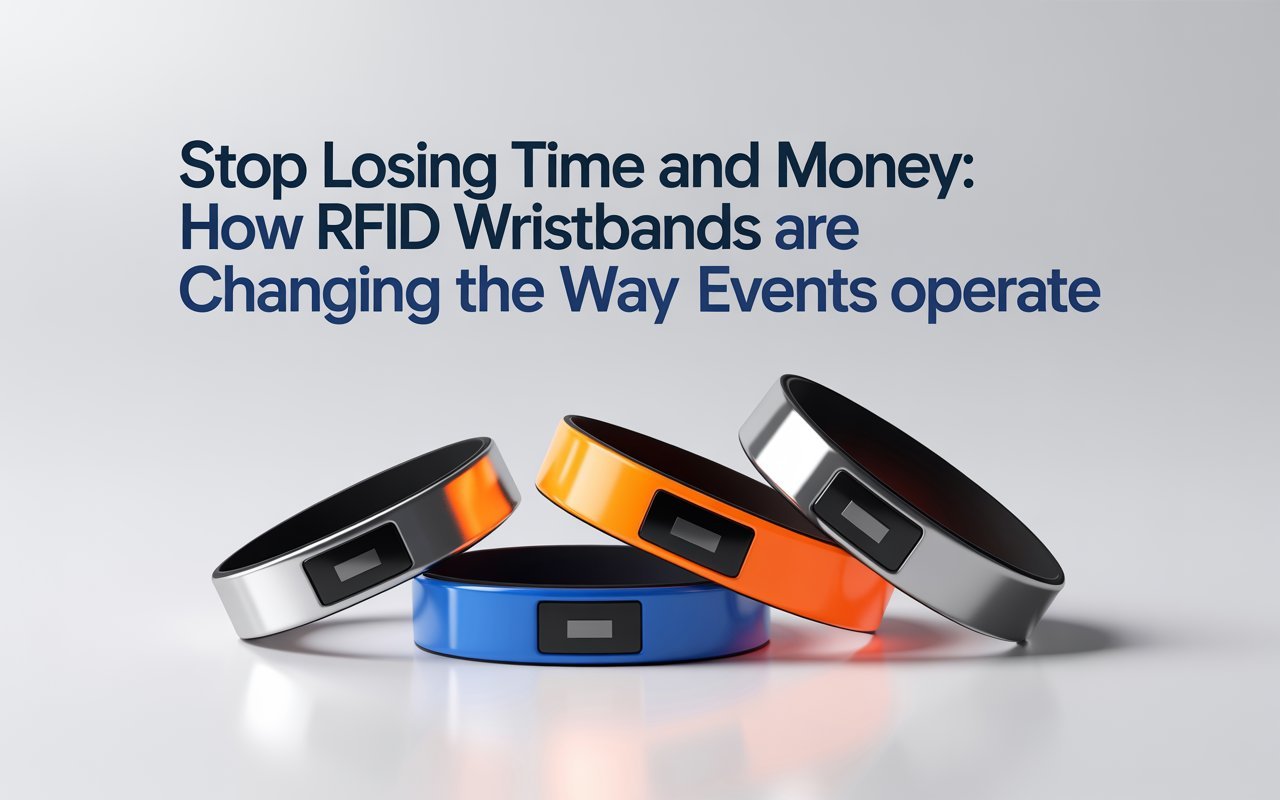
Stop Losing Time and Money: How RFID Wristbands Are Changing the Way Events Operate
Are you still struggling with long queues, misplaced tickets, and frustrated guests at your events? That stress doesn’t just affect attendees—it reflects directly on your brand, reduces operational efficiency, and limits your event’s true potential.
The real problem is relying on outdated event management systems that can no longer meet modern expectations. Manual check-ins, paper tickets, and cash-based transactions create delays, increase human error, and open the door to fraud. As events scale in size and complexity, these inefficiencies multiply, leading to poor guest experiences and missed revenue opportunities. In a fast-paced environment like the UAE events industry, sticking to old methods means falling behind competitors who are already adopting smarter solutions.
The solution is simple yet powerful: RFID wristbands. These innovative, contactless devices transform how events operate by replacing traditional processes with seamless automation. From instant check-ins and secure access control to cashless payments and real-time data tracking, RFID wristbands eliminate friction at every touchpoint. The result is faster operations, stronger security, and a more personalized, memorable experience for every guest—while giving organizers complete control and valuable insights to maximize event success.
The Invisible Engine: How RFID Technology Works in an Event Setting
To understand why RFID wristbands for events are so effective, one must first understand the “magic” behind the tap. Unlike barcodes, which require a laser to physically “see” a printed code, Radio Frequency Identification uses electromagnetic fields to transfer data.
Each wristband contains a tiny microchip and a radio antenna. When a guest brings their wristband near a reader—whether at an entry gate, a VIP lounge, or a food vendor—the reader sends out a signal that “wakes up” the chip. In a fraction of a second, the chip sends back a unique identification number.
This speed is the primary reason why RFID event technology has become the gold standard. In a high-pressure environment like a stadium entry, saving three seconds per person across 20,000 attendees results in hours of saved time and a significantly happier crowd.
Elevating Event Security and Access Control
Security is the foundation of any successful gathering. Traditional ticketing systems are notoriously easy to exploit. Digital QR codes can be screenshotted and shared, and physical paper tickets can be forged with a high-quality printer.
1. Eliminating Ticket Fraud
RFID event security systems provide a digital “lock and key” that is nearly impossible to replicate. Each chip is encrypted with a unique ID that is hard-coded during manufacturing. Because the system verifies the chip against a live database, any attempt to use a cloned band is flagged immediately.
2. Precise Zone Management
Large-scale events often have complex layouts—General Admission, VIP sections, backstage areas, and staff-only zones. Managing these with manual staff checks is expensive and prone to human error. With RFID wristbands, access is automated. A guest simply taps their band; if they have the right credentials, the light turns green. If not, it turns red. This allows organizers to reduce the number of security personnel needed at internal checkpoints while actually increasing the level of security.
3. Real-Time Crowd Intelligence
One of the most powerful features of RFID event solutions is the ability to see exactly where people are. If a specific entrance is becoming overcrowded, organizers receive a real-time alert. They can then redirect staff to that area or use digital signage to guide guests to a less busy entry point. This proactive approach to crowd management is essential for safety compliance in modern venues.
The Rise of the Cashless Economy: RFID Payment Technology
Perhaps the most significant impact of RFID on the bottom line is the move toward cashless environments. When a guest links their credit card or pre-loads a digital balance onto their wristband, the psychology of spending changes.
1. Reducing Transaction Friction
In a traditional cash or card environment, a guest has to find their wallet, wait for the card to process, or deal with change. In a crowded festival, this friction often discourages people from buying that second drink or a piece of merchandise. With RFID payment technology, a transaction takes less than a second.
2. Increasing On-Site Revenue
Data from major global events shows that when guests use “tap-to-pay” wristbands, they spend significantly more—often between 15% and 30% more than they would with cash. The ease of the transaction makes the spending process feel seamless and less “painful” for the consumer.
3. Operational Transparency for Vendors
For event organizers, tracking vendor sales can be a nightmare. Cashless systems provide a digital paper trail for every single cent spent on-site. This ensures that commission structures are honored and that vendors have accurate data to manage their inventory effectively.
8 Game-Changing Benefits of RFID Wristbands for Events
As we move through 2026, the competitive advantage of RFID lies in its ability to merge digital intelligence with physical operations.
- Lightning-Fast Entry & Throughput
RFID readers process attendees in under 0.5 seconds. Unlike barcodes that require a direct line of sight, a simple “tap-and-go” motion keeps gates moving, reducing entry queues by up to 40%. - Contactless Cashless Payments
By linking wristbands to a digital wallet, you eliminate cash-handling errors and speed up bar and food transactions. Statistics show attendees spend an average of 15–30% more when using cashless systems due to the reduced “pain of payment.” - Advanced Security & Anti-Counterfeiting
RFID chips use military-grade encryption, making them nearly impossible to clone. If a guest loses their band, staff can deactivate the unique ID instantly and transfer the remaining balance or access rights to a new one. - Real-Time Operational Intelligence
Track attendee flow in real-time to identify “heat maps” of venue activity. This allows you to reallocate security or staff to busy zones dynamically before bottlenecks become a safety issue. - Seamless Zone & VIP Management
Manage multi-tiered access (VIP, Backstage, Press) without manual wristband color checks. A single chip stores all permissions, allowing for automated gate control at exclusive lounges or zones. - Enhanced Sponsor ROI & Activations
Offer sponsors data-driven proof of value. “Tap-to-win” stations or social media check-in points allow sponsors to capture leads and engagement metrics with 100% accuracy. - Personalized Attendee Experiences
Integrate with event apps to provide personalized welcomes at check-in or send push notifications for sessions an attendee is likely to enjoy based on their movement history. - Environmental Sustainability
Digital ecosystems reduce the need for paper tickets and plastic tokens. In 2026, many RFID wristbands are also available in RPET (recycled plastic) or bamboo to align with corporate ESG goals.
How to Successfully Implement RFID for Your 2026 Event
Successful implementation requires a structured timeline—ideally starting 4–6 months before the event date.
1. Define Your Technical Requirements
Before ordering hardware, decide if your system will be Online (requires constant 5G/Wi-Fi) or Offline (data stored on the chip/local server). For large-scale festivals, a hybrid system with offline capability is recommended to prevent disruptions during network outages.
2. Select the Right Material & Frequency
- Fabric/Woven: Best for multi-day festivals; durable and highly branded.
- Silicone: Waterproof and premium; ideal for water parks or luxury VIP summits.
- High-Frequency (HF/NFC): The standard for 2026 events; provides secure short-range communication for payments and entry.
3. Build a “Frictionless” Workflow
Map out the attendee journey from the moment they receive their wristband.
- Pre-event Fulfillment: Mail wristbands to attendees in advance to allow for home activation and balance top-ups.
- On-site Top-up Stations: Ensure physical kiosks are available for guests who prefer to load cash onto their bands.
4. Conduct Extensive Site Surveys
Metal structures and dense crowds can interfere with radio signals. Conduct “soak tests” and signal interference checks at the venue months in advance to ensure reader placement is optimized for high-density environments.
5. Staff Training & Troubleshooting
The success of your RFID rollout depends on your team. Train gate staff on how to handle “Red Light” scenarios (rejected scans) and equip customer service booths with “Master Chips” to quickly resolve technical disputes or lost band issues.
Would you like me to create a technical requirement checklist specifically tailored for a high-security event like a government summit or a medical conference?
Choosing the Right Material for Your Event
Not all RFID wristbands are created equal. The choice of material depends entirely on the duration of the event, the environment, and the brand image you wish to project.
- Fabric Wristbands: These are the “souvenir” choice. They are comfortable for multi-day wear and highly customizable with woven designs. They usually feature a “sliding lock” that prevents the band from being transferred to another person, making them perfect for three-day music festivals.
- Silicone Wristbands: These are premium, waterproof, and extremely durable. They are the ideal choice for water parks, high-end gyms, or exclusive beach clubs in the UAE. Because they are aesthetically pleasing, guests often keep them long after the event ends.
- Vinyl and Tyvek: These are the workhorses of the industry. They are cost-effective and designed for single-day use. While less “luxurious” than fabric or silicone, they are highly effective for simple access control.
Strategic Implementation: Moving Beyond the Hardware
At AEC International, we believe that the hardware is only 20% of the solution. The remaining 80% is the strategy and integration behind it. Implementing RFID wristbands for events requires a clear roadmap:
Step 1: Defining the Scope
Do you only need access control? Or are you looking for a full cashless integration with social media “tap” points? Defining these goals early ensures the right frequency (HF vs. UHF) is selected.
Step 2: System Integration
The RFID system must talk to your existing software. Whether it’s a healthcare database for patient identification or a retail POS system, seamless integration is what prevents technical glitches on the day of the event.
Step 3: Infrastructure Readiness
A common mistake is assuming the venue’s Wi-Fi can handle the load. Professional RFID event solutions utilize localized servers and “offline-capable” readers. This means that even if the internet goes down, the gates keep opening and the drinks keep being sold.
Frequently Asked Questions
Are RFID wristbands safe for children and patients? Absolutely. The technology uses low-frequency radio waves that are completely harmless to the human body. They are used globally in hospitals for patient tracking and in theme parks for children’s access.
What happens if a guest loses their wristband? Because the “value” is stored in the cloud and not on the physical chip, a lost band can be deactivated instantly. A new band is then synced to the guest’s account, and their balance or access permissions are restored.
Can the wristbands be branded? Yes. Every part of the wristband, from the strap to the RFID housing, can be printed with logos, sponsor names, or event colors. This turns the technology into a marketing tool that lives on the guest’s wrist.
How far is the read range? For payments and secure access, we use High-Frequency (HF) chips which require a close-range tap (1-10cm). For general crowd tracking, Ultra-High Frequency (UHF) can be used, which can read from several meters away.
Is it expensive to implement? While there is an upfront cost for hardware and chips, the return on investment is usually seen within the first few hours of the event through labor savings, fraud elimination, and increased vendor sales.
Final Thoughts: The Future of Interaction
We are rapidly moving toward a world where the boundary between digital systems and real-world experiences becomes invisible. RFID event technology is making this shift possible by seamlessly connecting physical access with digital intelligence. Instead of relying on printed tickets or carrying cash, guests can simply tap their wristband and move effortlessly through entry points, payment stations, and restricted areas. This creates a frictionless environment where technology works quietly in the background, allowing attendees to stay fully immersed in the event.
The real challenge for organizations is managing large-scale events without operational delays, security risks, or disconnected systems. Traditional methods often result in long queues, poor crowd control, and limited visibility into attendee behavior. These issues not only disrupt the experience but also prevent businesses from maximizing engagement and revenue opportunities.
The solution is partnering with an experienced provider like AEC International to implement RFID-driven event systems with precision. From advanced hardware to real-time data integration and on-site technical support, AEC ensures a smooth transition to smart event management. This allows organizations across the UAE and beyond to transform logistical challenges into a powerful competitive advantage while delivering exceptional, data-driven guest experiences.